Blog
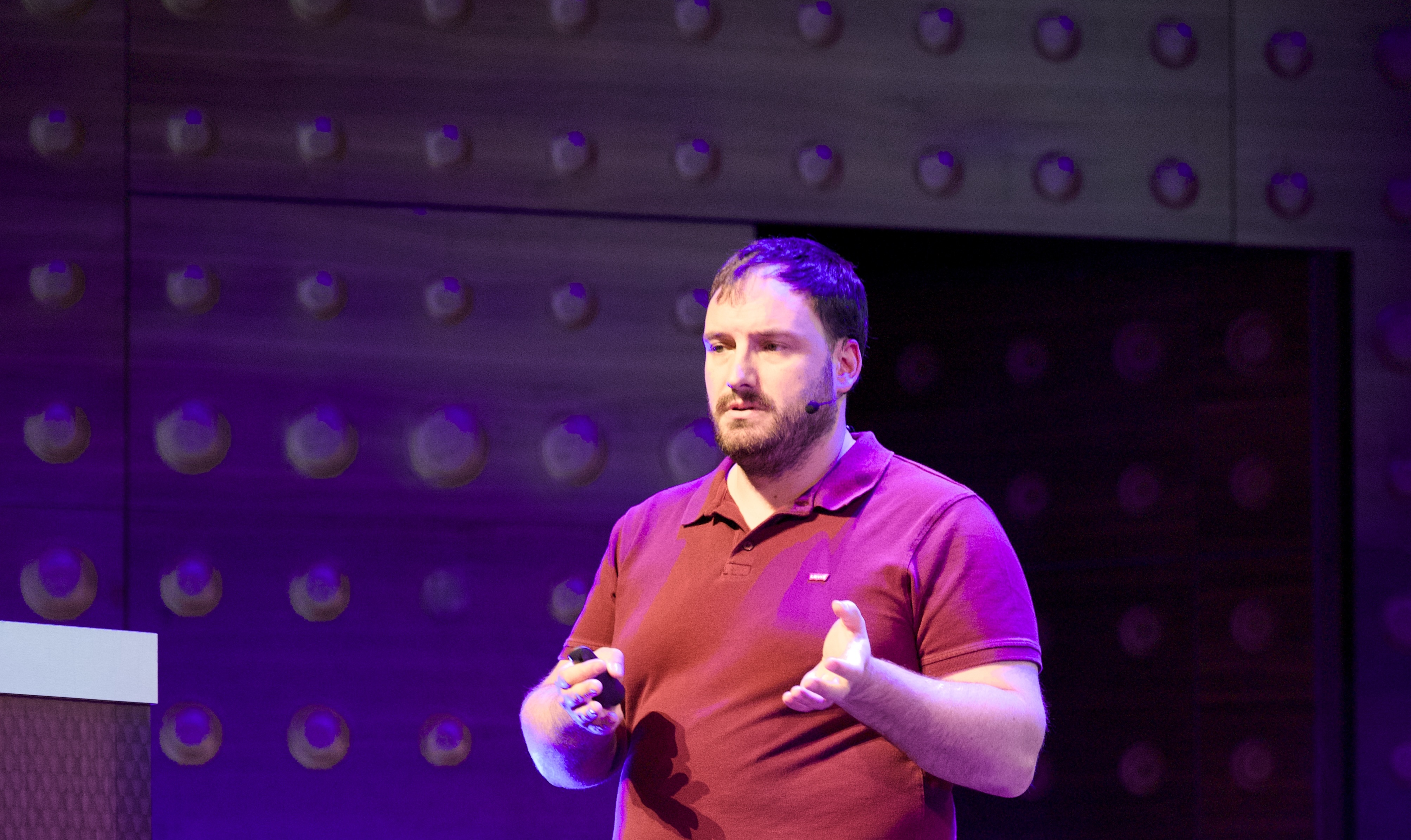
Models Beyond Diagrams, a talk by Stijn Vannieuwenhuyse
Posted on 2026-10-12 - 4 minute read
A ten-year-old wanted to watch the news. He opened the TV app and could not find today's episode. His dad told him it had not aired yet. The boy was baffled.
Both were talking about the same device, but they were using different mental models. For the boy, television is a library you browse on demand. For his dad, it is a timeline of channels. If you miss something, you miss it.
That small story opened Stijn's talk at DDD Europe 2026. It also captures his main point. A model is not a diagram. It is a system of abstractions in our heads. Everything else is an expression of it.
The map is not the model
Think of a metro map. It is not accurate. Distances are off, and stations are not where they really are. Yet it works, because it gives us a simple mental model of lines, directions, colours, and stops. The drawing supports the model. It does not replace it.
Four traits of a good model
A good model does not need to be complete. It needs to be useful. Stijn shared four traits, using our model of time as the example:
- It makes reality manageable. A year has 365 days, with a patch every four years. That is a convenient simplification, not the truth.
- It enables new things. Weeks, hours, and minutes do not exist in nature. We invented them so we could meet.
- It compresses meaning. The right nouns replace whole sentences. Nobody wants to schedule a deadline by the blooming of the white petal trees.
- It sharpens thinking. What is a day for a night-shift worker? The everyday calendar day breaks down there. So we need a new concept, such as a shift day or a payroll day.
Modelling is aligning
Everyone already has a model in their head. So Stijn sees modelling as the act of aligning individual models. Business and development often carry different ones. You can spot it when a small change becomes a big effort, when requirements meetings never end, or when a shadow system appears in Excel.
The answer is not simply more communication. People can talk perfectly well and still picture different things. They need one shared model, owned by everyone involved.
Many windows on one model
We can never draw a model in full. It is multi-dimensional. So we look at it from several angles: sketches, structural views, sticky notes, event storming, domain storytelling, state machines, and BDD (behavior-driven development) scenarios. Each one reveals different questions.
More artefacts do not mean more understanding. A model that is too big to fit in people's heads is a smell. Split it into smaller ones.
Language and code are special
Language runs through everything. Stijn showed how a vague sentence about cancelled registrations became sharper, step by step. It ended as: a pending registration expires when its reservation window closes unsettled. Nearly every word became ubiquitous language. The verbs matter most, because they tell us what the model does.
Code is another expression. It should stay as close as possible to the shared model. The data model comes later. It supports the code, and should not drive the design.
Why this matters more with AI
Humans rebuild models from the traces others leave behind. Conversation is the most undervalued of those traces. AI assistants do the same, but faster and with less judgement. They infer a model from what we give them.
AI lowers the cost of producing code. It does not lower the cost of being conceptually wrong. If our traces are unclear or inconsistent, AI will help us build the confusion faster. Stijn believes modelling will only grow in importance.
Conclusion
Good models make problems manageable, let us do new things, compress meaning, and sharpen our thinking. Modelling is about aligning minds, not drawing diagrams.
What participants said about this talk
These are interesting concepts about what a model is and what makes it good. I liked the terms: expands capabilities, compresses meaning, and I like the ideas presented to expose hidden assumptions. Bonus points for the remark that we should be modelling behaviour primarily. These insights will improve my focus on what and why I am modelling.
I liked the story of this talk, it was inspiring. From now on, I will let others know about the importance of modelling